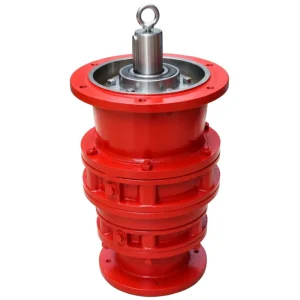
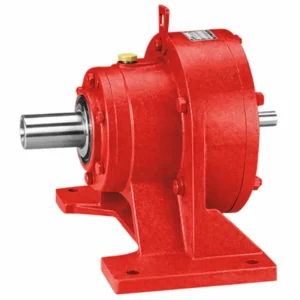
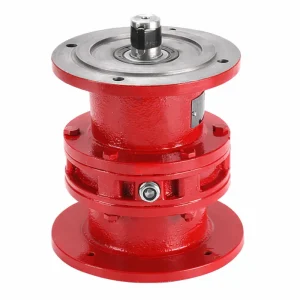
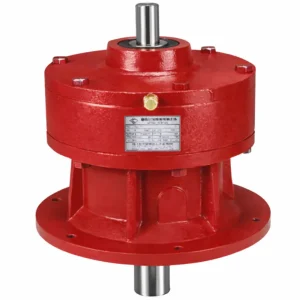
Caja de engranajes cicloidales EP-BWE Serie XWE
The EP-BWE XWE Series Cycloidal Gearbox is purpose-built to serve as both a primary drive reducer and a delayed-assembly unit across a broad spectrum of heavy industries. Whether deployed in chemical processing lines, cement conveyor systems, pharmaceutical manufacturing, or automated packaging operations, the EP-BWE XWE Cycloidal Gearbox maintains stable torque output with minimal vibration and remarkably quiet operation. Its transmission efficiency consistently exceeds 90%, making it an energy-conscious choice for facilities focused on long-term operational cost management.
Unlike standard involute gear reducers, the cycloidal disc mechanism distributes contact load across multiple pin engagements simultaneously. This multi-point load sharing is the fundamental reason why the EP-BWE XWE industrial cycloidal gearbox excels in shock-load environments — such as mining conveyors, metallurgical handling equipment, and construction machinery
1. Technical Performance Parameters of Cycloidal Gearbox
| Parámetro | Especificación | Notas |
|---|---|---|
| Transmission Efficiency | 94% – 96% | Average >90% under rated load |
| Single-Stage Ratio | 1:6 – 1:87 | Cycloidal pin gear engagement |
| Double-Stage Ratio | 1:99 – 1:7,569 | Stacked cycloidal stages |
| Noise Level (MAX) | 60 – 70 dB(A) | At rated speed and load |
| Temperature Rise (MAX) | 60°C | Above ambient under continuous operation |
| Vibración | ≤ 20 µm | Peak-to-peak at output shaft |
| Reacción | ≤ 60 Arc-min | Low backlash cycloidal reducer performance maintained over service life |
| Rated Power Range | 0.37 kW – 55 kW | Motor input |
| Max. Output Torque | 150 – 20,000 N·m | Model-dependent; see dimensional table |
| Lubricación | GB 2# Lithium Grease / Mobilux EP 2 | Sealed housing; extended intervals |
| Mounting Configurations | Horizontal / Vertical / Double-Axle / Direct | Foot-mounted as standard on BWE/XWE series |
| IP Rating | IP54 (standard) | Higher ratings available on request |

EP-BWE Series — Mounting & Outline Dimensions (mm)
| Modelo | H₀ (mm) | A (mm) | B (mm) | H (mm) | D (mm) | L-Dual (mm) | L₁-Dual (mm) | Peso (kg) |
|---|---|---|---|---|---|---|---|---|
| BWE 31 | 140 | 150 | 290 | 240 | 200 | 310 | 258 | 37 |
| BWE 42 | 120 | 195 | 330 | 275 | 240 | 384 | 326 | 75 |
| BWE 53 | 160 | 260 | 420 | 356 | 300 | 457 | 383 | 94 |
| BWE 63 | 200 | 335 | 430 | 425 | 340 | 519 | 447 | 148 |
| BWE 74 | 225 | 380 | 470 | 460 | 360 | 589 | 508 | 193 |
| BWE 84 | 250 | 440 | 530 | 529 | 430 | 633 | 552 | 270 |
| BWE 85 | 290 | 440 | 530 | 529 | 430 | 656 | 566 | 310 |
| BWE 95 | 290 | 560 | 620 | 614 | 500 | 745 | 655 | 485 |
| BWE 106 | 325 | 600 | 690 | 706 | 580 | 855 | 750 | 750 |
| BWE 116 | 420 | 810 | 880 | 883 | 710 | 1,066 | 958 | 1,232 |
| BWE 117 | 420 | 810 | 880 | 883 | 710 | 1,081 | 963 | — |
EP-XWE Series — Mounting & Outline Dimensions (mm)
| Modelo | H₀ (mm) | A (mm) | B (mm) | H (mm) | D (mm) | L-Dual (mm) | L₁-Dual (mm) | Peso (kg) |
|---|---|---|---|---|---|---|---|---|
| XWE 130 | 160 | 250 | 390 | 356 | 300 | 414 | 367 | 82 |
| XWE 131 | 160 | 250 | 390 | 356 | 300 | 448 | 383 | 100 |
| XWE 141 | 200 | 380 | 400 | 425 | 340 | 519 | 447 | 153 |
| XWE 152 | 240 | 440 | 470 | 529 | 430 | 633 | 552 | 245 |
| XWE 153 | 290 | 440 | 470 | 529 | 430 | 666 | 566 | 265 |
| XWE 163 | 290 | 560 | 620 | 614 | 500 | 755 | 655 | 460 |
| XWE 174 | 325 | 600 | 690 | 706 | 580 | 860 | 750 | 710 |
| XWE 184 | 420 | 810 | 880 | 883 | 710 | 1,077 | 959 | 1,270 |
2. Five Key Product Advantages
What separates the EP-BWE XWE Series Cycloidal Gearbox from conventional speed reducers is not any single feature but a combination of engineering choices that compound into superior real-world performance. The following five advantages define why this unit is a preferred specification among procurement engineers across North America and beyond.
01 — Ultra-Wide Reduction Range
Single-stage ratios from 1:6 to 1:87 and double-stage ratios from 1:99 to 1:7,569 eliminate the need for external gearing stages, simplifying mechanical system design and reducing total drivetrain cost. Engineers gain precise control over output speed without sacrificing compactness.
02 — Verified High Efficiency
Transmission efficiency is rated at 94%–96%, well above the 70%–85% typical of worm gear reducers. This efficiency advantage translates directly into reduced motor load, lower energy bills, and less heat generated within the gearbox — extending lubricant life and prolonging service intervals significantly.
03 — Exceptional Shock Load Tolerance
The distributed contact across cycloidal disc lobes and ring pins means load is never concentrated at a single gear tooth pair. This architecture absorbs instantaneous shock loads that would fracture traditional gear teeth, making the EP-BWE XWE Series Cycloidal Gearbox ideal for conveyors, crushers, and intermittent-duty lifting equipment.
04 — Low Noise, Low Vibration
Operating noise is controlled to 60–70 dB(A) maximum, and shaft vibration is maintained below ±20 µm. These figures meet the requirements of noise-sensitive facilities such as pharmaceutical cleanrooms, food processing plants, and indoor logistics hubs where operator comfort and environmental compliance are statutory obligations.
05 — Compact Footprint, Long Service Life
The coaxial input-output shaft arrangement reduces overall installed length by more than two-thirds compared to equivalent two-stage cylindrical reducers. Quench-hardened bearing steel components and sealed lubrication extend maintenance intervals and service life, reducing total lifecycle cost for plant operators managing large equipment fleets.
3. Working Principle of the Cycloidal Pin Gear Reducer
At the mechanical core of the EP-BWE XWE reductor de velocidad cicloidal lies a principle distinct from conventional involute gearing. The input shaft connects eccentrically to a bearing assembly that drives a cycloidal disc. As the input shaft rotates, the eccentric bearing causes the disc to orbit — not spin freely — within a fixed-pin ring gear. The disc's lobed perimeter engages sequentially with the ring pins distributed around the housing interior, and this rolling-without-sliding contact generates the reduction in rotational speed.
Because multiple lobes are in simultaneous mesh at any moment, torque is distributed across several contact points rather than concentrated at a single tooth pair. This is the mechanical origin of the EP-BWE XWE Cycloidal Gearbox's exceptional shock-load resistance. Roller pins embedded through the cycloidal disc transfer the orbital motion to an output disc, which converts epicyclic motion into smooth, continuous rotation at the output shaft — all without any relative sliding between the contact surfaces.
In the double-stage configuration of this series, a second cycloidal stage is stacked in series with the first, multiplying the speed reduction ratio exponentially. The coaxial arrangement of input and output shafts — a defining characteristic of cycloidal gearbox design — means the unit can be integrated directly inline with a motor shaft, eliminating the need for offset belt or chain drives. This inline architecture also improves dynamic balance, which in turn reduces bearing fatigue and extends the mean time between overhaul (MTBO) intervals.
The quench-and-temper heat treatment applied to all rotating components ensures surface hardness sufficient to resist abrasive wear while retaining a tough core that withstands impact without brittle fracture. GB 2# Lithium grease (or equivalent Mobilux EP 2) provides boundary lubrication at all cycloidal contact interfaces, maintaining a protective film even under the heavy preloads typical of high-ratio reduction applications.
4. Materials & Material Specifications
Material selection for the EP-BWE XWE motorreductor cicloidal drive series reflects decades of accumulated field data from heavy industrial deployments. Every material choice is deliberate — balancing hardness, toughness, machinability, and corrosion resistance against the specific stress environment each component must endure over a service life measured in years rather than months.
| Componente | Material | Treatment | Función |
|---|---|---|---|
| Alojamiento | Grade H Cast Iron | As-cast, precision machined | Structural rigidity and vibration damping |
| Cycloidal Disc | GCr15 High-Carbon Chromium Bearing Steel | Quenching + Tempering | Primary torque transmission; hardened contact surface |
| Input Shaft | #45 High-Carbon Chromium Steel | Quenching + Tempering | Torsion and bending load carrier; keyway interface |
| Eje de salida | #45 High-Carbon Chromium Steel | Quenching + Tempering | Load transfer to driven equipment |
| Ring Pin | GCr15 Bearing Steel | Fine ground post-hardening | Cycloidal disc engagement; wear surface |
| Lubricante | GB 2# Lithium Grease / Mobilux EP 2 | Sealed housing | Boundary film maintenance at all contact interfaces |
The combination of GCr15 bearing steel for the cycloidal disc and ring pins — both finished to fine-ground tolerances after heat treatment — creates a contact pair with surface hardness sufficient to resist abrasive wear while the tempered core maintains impact resistance. This dual characteristic (hard surface, tough core) is what enables the caja de engranajes reductora cicloidal to tolerate the shock loads common in mining, construction, and heavy process industries without progressive tooth damage.

5. Escenarios de aplicación
El cycloidal gearbox automation capability of this series, combined with its wide ratio range and multi-mounting flexibility, makes it one of the most broadly deployed drive units in industrial settings. The following sectors represent primary end-use environments where the EP-BWE XWE Series Cycloidal Gearbox delivers consistent, documented performance.
Chemical & Environmental Processing
Agitators, mixer drives, and wastewater treatment aeration equipment require continuous duty operation at stable low speeds. The sealed lubrication system and corrosion-resistant housing make the EP-BWE XWE Cycloidal Gearbox a natural fit for wet and chemical-laden environments.
Cemento y materiales de construcción
Kiln ring drives, rotary coolers, and raw material handling conveyors operate under sustained high-torque, dusty conditions. The multi-point load contact of the cycloidal disc distributes stress evenly, preventing the localized tooth fatigue that limits standard helical gear reducers in these environments.
Food, Beverage & Pharmaceutical
Filling lines, packaging conveyors, and mixing vessels demand low-noise operation, easy cleaning access, and zero contamination risk. The low vibration (≤20 µm) and sealed bearing arrangement of this series meet GMP facility standards and FDA 21 CFR Part 110 production environment requirements applicable in the United States.
Maquinaria textil y de impresión
Warp beam drives, fabric tension rolls, and printing cylinder feeds require precise, repeatable speed ratio with minimal backlash drift over time. The ≤60 arc-min backlash specification of the EP-BWE XWE Cycloidal Gearbox holds even after extended operation, maintaining registration accuracy on high-speed printing lines and fabric tension systems.
Mining & Metallurgy
Ore conveyors, ball mill drives, and smelter trolley systems impose severe shock loads and continuous heavy-duty cycles. The quench-hardened GCr15 disc and ring pin assembly is specifically suited to absorbing these intermittent overloads while the cast iron housing damps structural vibration back to the machine frame.
Power Generation & Lifting Equipment
Cooling tower fan drives, sluice gate actuators, and overhead crane travel mechanisms operate in outdoor or semi-outdoor environments with wide temperature swings. The IP54-rated (standard) housing and high-temperature lithium grease formulation maintain performance across the full specified ambient temperature range without additional environmental enclosures.
6. Regulatory Compliance & International Standards
Procurement teams sourcing a cycloidal gearbox supplier USA or internationally must verify that the selected drive unit meets the regulatory framework applicable to their facility and target market. The EP-BWE XWE Series is engineered with reference to the following mandatory and voluntary standards:
| Región/Mercado | Standard / Regulation | Alcance |
|---|---|---|
| Estados Unidos | OSHA 29 CFR Parte 1910 (Protección de maquinaria) | Requiere una protección adecuada en todos los componentes mecánicos giratorios; aplicable a los ejes de salida de las cajas de engranajes y a los acoplamientos instalados en instalaciones de EE. UU. |
| Estados Unidos | AGMA 9009-D02 (Alineación de acoplamientos flexibles) | Establece las tolerancias de alineación del eje aplicables durante la instalación de la caja de engranajes para evitar fallas prematuras en los cojinetes. |
| Estados Unidos / Canadá | Normas ANSI/ABMA (Tolerancias de rodamientos) | Las especificaciones internas de los cojinetes cumplen con las normas dimensionales y de tolerancia de ABMA. |
| unión Europea | Directiva de Maquinaria de la UE 2006/42/CE + Marcado CE | Obligatorio para los componentes de accionamiento incorporados en la maquinaria vendida dentro de la UE; se requiere la declaración de conformidad CE. |
| unión Europea | Directiva RoHS 2011/65/UE | Restringe las sustancias peligrosas en equipos eléctricos y electrónicos, incluidas las unidades de motor integradas en cajas de engranajes. |
| Global (ISO) | ISO 9001:2015 (Gestión de la calidad) | Marco de garantía de calidad del proceso de fabricación; garantiza controles de producción documentados. |
| Global (ISO) | ISO 6336 (Capacidad de carga de los engranajes) | Base de diseño para cálculos de tensión de dientes y contactos en geometría de disco cicloidal |
| Australia / Nueva Zelanda | AS 4024 (Seguridad de la maquinaria) | Regula los requisitos de seguridad para componentes giratorios en instalaciones industriales australianas. |
| Japón | JIS B 1701 (Engranajes cilíndricos) | Norma industrial japonesa para tolerancias de engranajes y acabado superficial aplicable a componentes de transmisión exportados a Japón. |
Las instalaciones que operan en los sectores alimentario y farmacéutico de Estados Unidos deben verificar, además, el cumplimiento de la norma FDA 21 CFR Parte 110 (Buenas Prácticas de Fabricación Actuales para la Fabricación, el Envasado y el Almacenamiento de Alimentos para Consumo Humano) al especificar esta unidad para líneas de producción de alimentos con contacto directo o casi directo. El sistema de lubricación sellado y la carcasa de hierro fundido facilitan el cumplimiento, pero el usuario final es responsable de la evaluación de riesgos y la documentación de higiene específicas de la planta.
7. Sobre nosotros
Somos un fabricante especializado en soluciones de transmisión de potencia industrial con una sólida base de ingeniería en tecnología de engranajes cicloidales y planetarios. Nuestro equipo de ingeniería acumula décadas de experiencia en el diseño de reductores cicloidales, desde unidades compactas básicas utilizadas en sistemas de posicionamiento servo hasta modelos de gran tamaño de doble etapa con montaje sobre base, específicos para transportadores mineros de servicio continuo. Ofrecemos soluciones personalizadas para la fabricación de reductores cicloidales, trabajando a partir de planos CAD o especificaciones de aplicación proporcionadas por el cliente para producir variantes no estándar de relación de transmisión, configuración de eje o material de carcasa.
Nuestro sistema de calidad se ajusta a la norma ISO 9001:2015, y la inspección de salida incluye la verificación dimensional, la medición del juego, las pruebas de funcionamiento y la evaluación de ruido y vibraciones antes del envío.
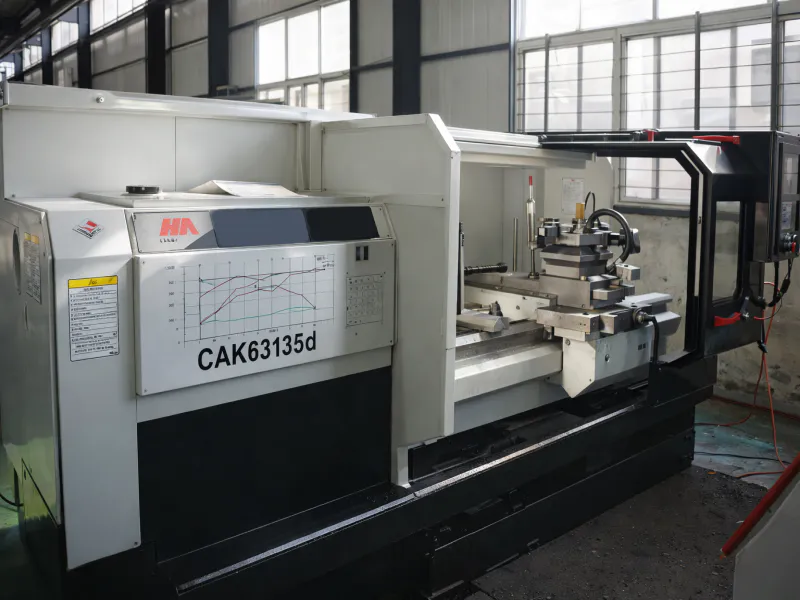
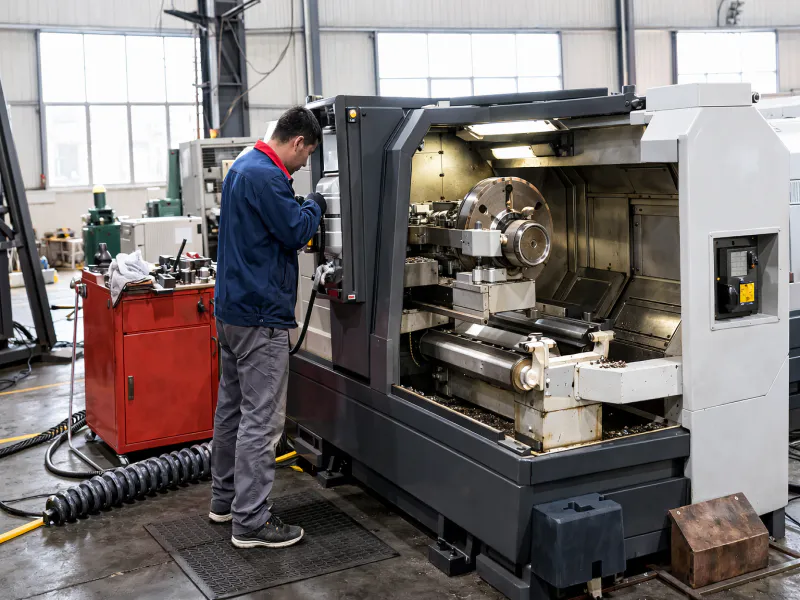
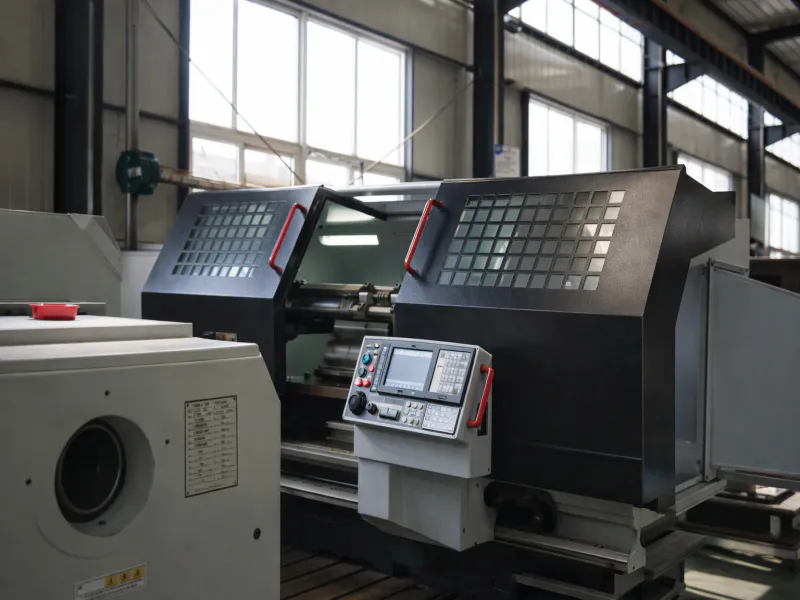
Taller


8. Guía de instalación y puesta en marcha
La correcta instalación es tan crucial para el rendimiento a largo plazo de la caja de engranajes como el propio diseño de la unidad. La siguiente secuencia de instalación se aplica a la configuración de montaje sobre base de doble etapa EP-BWE XWE y debe seguirse íntegramente durante la puesta en marcha inicial, así como después de cualquier revisión programada.
Antes de comenzar, verifique que las dimensiones del bastidor del motor, el diámetro del eje y las dimensiones de la chaveta sean compatibles con la interfaz de entrada de la caja de engranajes. Limpie todas las superficies de contacto (el soporte del motor, el eje de entrada y el receptáculo del reductor) con un disolvente adecuado para eliminar los restos de la capa protectora contra la corrosión. Este paso garantiza la concentricidad total en la interfaz de entrada, que es la principal causa de fallas prematuras en los rodamientos cuando se omite.
Al conectar el motor a la caja de engranajes, asegúrese de que el eje de salida del reductor y el eje de entrada del motor sean coaxiales y que las bridas exteriores sean paralelas. Nunca utilice un martillo para accionar las conexiones de los ejes; las cargas de impacto aplicadas axial o radialmente dañarán los cojinetes internos y los orificios de los pasadores del disco cicloidal. Utilice únicamente la secuencia de apriete especificada: instale los pernos de montaje apretándolos manualmente en posiciones opuestas antes de aplicar el par especificado con una llave dinamométrica calibrada, siguiendo la secuencia en cruz que se muestra en el manual de instalación. La chaveta del eje del motor debe ser perpendicular al eje del perno de apriete antes del acoplamiento final del anillo de sujeción.
Tras la instalación, realice una prueba en vacío de al menos 30 minutos y verifique que el aumento de temperatura, el nivel de ruido y la vibración del eje se encuentren dentro de los límites especificados antes de aplicar la carga del proceso. Cualquier aumento anómalo de temperatura superior a 60 °C con respecto a la temperatura ambiente, o un nivel de ruido superior a 70 dB(A), debe investigarse antes de comenzar la operación a plena carga.

Productos relacionados y compatibilidad del sistema
Nuestra capacidad de fabricación se extiende más allá de la caja de cambios cicloidal Para los clientes que ensamblan sistemas de accionamiento completos, suministramos componentes de entrada y salida compatibles diseñados para la integración directa, lo que elimina el esfuerzo de ingeniería de adaptadores e interfaces que normalmente se requiere al adquirir componentes de múltiples proveedores.
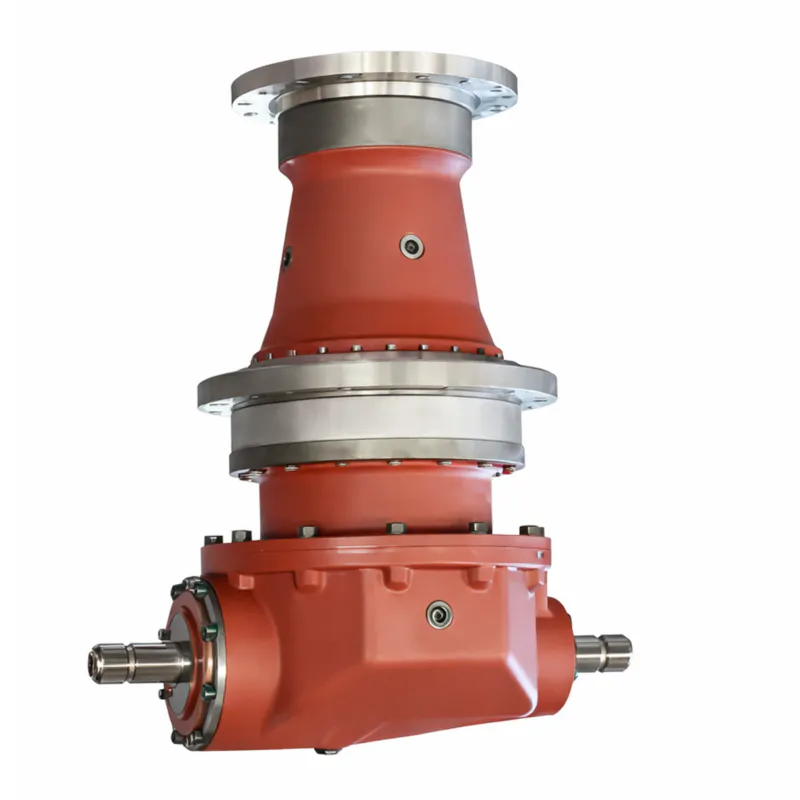
Caja de engranajes planetarios
Fabricadas con ingeniería de precisión y una construcción robusta, nuestras cajas de engranajes ofrecen una multiplicación de par fiable, una holgura mínima y una mayor capacidad de carga.
Motores de accionamiento
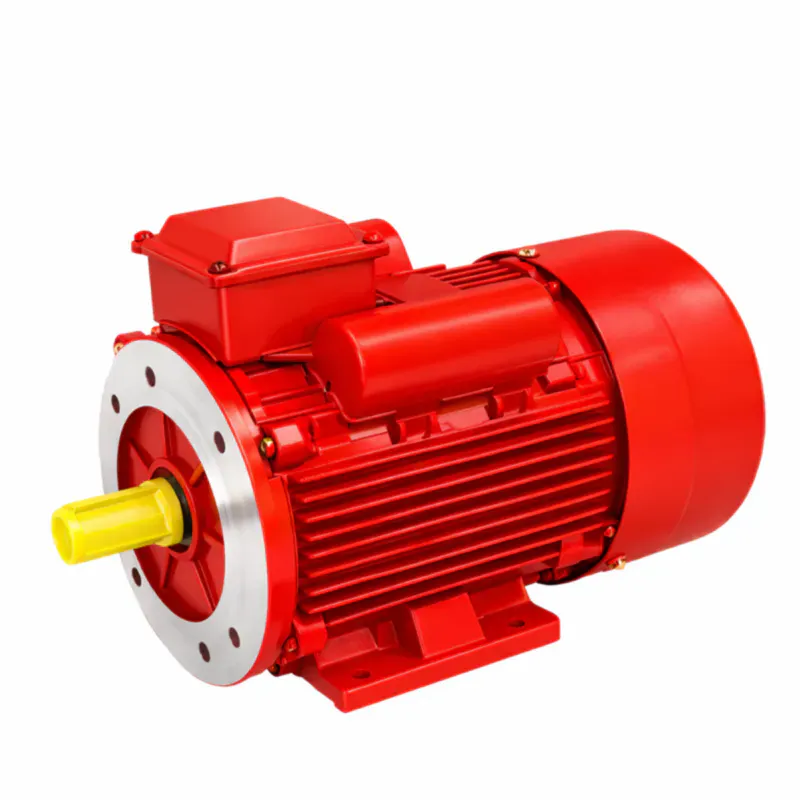
Disponemos de motores de inducción estándar IEC y NEMA con brida tipo C, preajustados a las dimensiones de brida de las series de reductores BLE y XLE. Ofrecemos opciones de motores trifásicos y monofásicos con eficiencia IE3, así como variantes para variadores de frecuencia (VFD) diseñadas para funcionar a par máximo a bajas velocidades, un requisito habitual en aplicaciones de agitadores y transportadores.
Preguntas frecuentes
Editor: PXY