Produktbeschreibung
Why Choose Us
Produktdetails
Typ | Worm Gear Speed Reducer/ gearbox |
Modell | WMRV 25/30/40/50/63/75/90/110/130/150/185 |
Verhältnis | 7.5,10,15,20,25,30,40,50,60,80,100. |
Farbe | Blue(RAL5571)/Silver grey (K9149) Or On Customer Request |
Material | Housing: Aluminum alloy(size 25~90) / Cast iron(size 110~185) |
Worm wheel: Aluminum Bronze or Tin Bronze | |
| Worm shaft: 20CrMn Ti | |
Output Shaft: steel-45# | |
Verpackung | Carton, Honey Comb Carton, Wooden Case with wooden pallet |
| Garantie | 1 Jahr |
| Input Power | 0.09kw,0.18kw,1.1KW,1.5KW,2.2KW,3KW,4KW,5.5KW,7.5KW,11Kw and so on. |
| Verwendung | Industrial Machine: Food Stuff, Ceramics, CHEMICAL, Packing, Dyeing,Wood working, Glass. |
| IEC-Flansch | IEC standard flange or on customer request |
| Schmiermittel | Synthetic oil or worm gear oil |
Unternehmensprofil
Ausstellung
Customized Service
Certificate&Honor
Customer Comments
Häufig gestellte Fragen
1. How to choose a gearbox which meets our requirement?
Sie können in unserem Katalog nachsehen, um das Getriebe auszuwählen, oder wir helfen Ihnen gerne bei der Auswahl, wenn Sie uns Ihre Angaben mitteilen.
die technischen Informationen zu erforderlichem Ausgangsdrehmoment, Ausgangsdrehzahl und Motorparametern usw.
2. What information shall we give before placing a purchase order?
a) Getriebetyp, Übersetzungsverhältnis, Eingangs- und Ausgangstyp, Eingangsflansch, Montageposition und Motorinformationen usw.
b) Gehäusefarbe.
c) Bestellmenge.
d) Sonstige besondere Anforderungen.
3. What industries are your gearboxes being used?
Our gearboxes are widely used in the areas of textile, food processing, beverage, chemical industry,
escalator,automatic storage equipment, metallurgy, tabacco, environmental protection, logistics and etc.
4. Do you sell motors?
We have stable motor suppliers who have been cooperating with us for a long-time. They can provide motors
with high quality.
/* 22. Januar 2571 19:08:37 */!function(){function s(e,r){var a,o={};try{e&&e.split(“,“).forEach(function(e,t){e&&(a=e.match(/(.*?):(.*)$/))&&1
| Anwendung: | Motoren, Maschinen, Landmaschinen |
|---|---|
| Funktion: | Distribution Power, Speed Changing, Speed Reduction, Speed Increase |
| Layout: | Koaxial |
| Proben: | US$ 25/Piece 1 Stück (Mindestbestellmenge) | Muster bestellen |
|---|
| Anpassung: | Verfügbar | Kundenspezifische Anfrage |
|---|
.shipping-cost-tm .tm-status-off{background: none;padding:0;color: #1470cc}
| Versandkosten: Geschätzte Frachtkosten pro Einheit. | über Versandkosten und voraussichtliche Lieferzeit. |
|---|
| Zahlungsmethode: |
|
|---|---|
| Erste Zahlung Vollständige Zahlung |
| Währung: | US$ |
|---|
| Rückgabe & Erstattung: | Sie können bis zu 30 Tage nach Erhalt der Produkte eine Rückerstattung beantragen. |
|---|
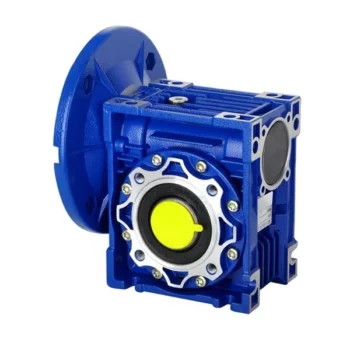
How to Install and Align a Worm Reducer Properly
Proper installation and alignment of a worm reducer are crucial for ensuring optimal performance and longevity. Follow these steps to install and align a worm reducer:
- Preparation: Gather all the necessary tools, equipment, and safety gear before starting the installation process.
- Positioning: Place the worm reducer in the desired location, ensuring that it is securely mounted to a stable surface. Use appropriate fasteners and mounting brackets as needed.
- Wellenausrichtung: Check the alignment of the input and output shafts. Use precision measurement tools to ensure that the shafts are parallel and in line with each other.
- Base Plate Alignment: Align the base plate of the reducer with the foundation or mounting surface. Ensure that the base plate is level and properly aligned before securing it in place.
- Bolt Tightening: Gradually and evenly tighten the mounting bolts to the manufacturer’s specifications. This helps ensure proper contact between the reducer and the mounting surface.
- Check for Clearance: Verify that there is enough clearance for any rotating components or parts that may move during operation. Avoid any interference that could cause damage or performance issues.
- Schmierung: Apply the recommended lubricant to the worm reducer according to the manufacturer’s guidelines. Proper lubrication is essential for smooth operation and reducing friction.
- Alignment Testing: After installation, run the worm reducer briefly without a load to check for any unusual noises, vibrations, or misalignment issues.
- Load Testing: Gradually introduce the intended load to the worm reducer and monitor its performance. Ensure that the reducer operates smoothly and efficiently under the load conditions.
It’s important to refer to the manufacturer’s installation guidelines and specifications for your specific worm reducer model. Proper installation and alignment will contribute to the gearbox’s reliability, efficiency, and overall functionality.
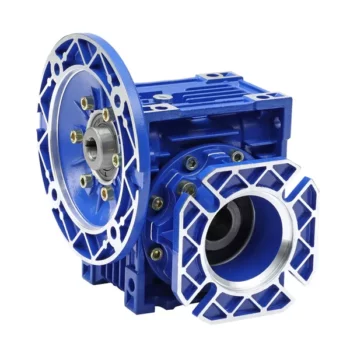
How to Calculate the Input and Output Speeds of a Worm Gearbox?
Calculating the input and output speeds of a worm gearbox involves understanding the gear ratio and the principles of gear reduction. Here’s how you can calculate these speeds:
- Eingangsgeschwindigkeit: The input speed (N1) is the speed of the driving gear, which is the worm gear in this case. It is usually provided by the manufacturer or can be measured directly.
- Ausgangsgeschwindigkeit: The output speed (N2) is the speed of the driven gear, which is the worm wheel. To calculate the output speed, use the formula:
N2 = N1 / (Z1 * i)
Where:
N2 = Output speed (rpm)
N1 = Input speed (rpm)
Z1 = Number of teeth on the worm gear
i = Gear ratio (ratio of the number of teeth on the worm gear to the number of threads on the worm)
It’s important to note that worm gearboxes are designed for gear reduction, which means that the output speed is lower than the input speed. Additionally, the efficiency of the gearbox, friction, and other factors can affect the actual output speed. Calculating the input and output speeds is crucial for understanding the performance and capabilities of the worm gearbox in a specific application.
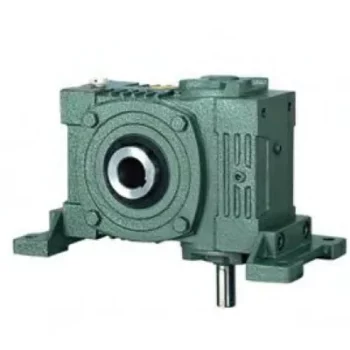
Vorteile des Einsatzes eines Schneckengetriebes in mechanischen Systemen
Schneckengetriebe bieten mehrere Vorteile, die sie für verschiedene mechanische Systeme geeignet machen:
- Hohes Untersetzungsverhältnis: Schneckengetriebe bieten eine erhebliche Drehzahlreduzierung und eignen sich daher ideal für Anwendungen, die ein hohes Untersetzungsverhältnis erfordern, ohne dass mehrere Zahnräder benötigt werden.
- Kompaktes Design: Schneckengetriebe zeichnen sich durch eine kompakte und platzsparende Bauweise aus, wodurch sie sich für Anwendungen mit begrenztem Platzangebot eignen.
- Selbstverriegelnd: Schneckengetriebe verfügen über eine Selbsthemmung, d. h. die Schneckenspindel verhindert, dass sich das Schneckenrad umkehrt. Dies ist vorteilhaft für Anwendungen, bei denen das Getriebe eine Last ohne externe Bremsmechanismen halten muss.
- Reibungsloser und leiser Betrieb: Schneckengetriebe arbeiten mit einer Gleitbewegung zwischen den Zähnen, was im Vergleich zu anderen Getriebetypen zu einem ruhigeren und leiseren Betrieb führt.
- Hochdrehmomentgetriebe: Schneckengetriebe können hohe Drehmomente übertragen und eignen sich daher für Anwendungen, die eine hohe Drehmomentabgabe erfordern.
- Wärmeableitung: Die Gleitbewegung zwischen Schnecke und Schneckenrad trägt zur Wärmeableitung bei, was bei Anwendungen, die während des Betriebs Wärme erzeugen, von Vorteil sein kann.
- Stabile Leistung: Schneckengetriebe bieten eine stabile und zuverlässige Leistung und eignen sich daher für den Dauerbetrieb in verschiedenen industriellen und mechanischen Systemen.
Trotz dieser Vorteile weisen Schneckengetriebe auch Einschränkungen auf, wie beispielsweise einen geringeren Wirkungsgrad im Vergleich zu anderen Getriebearten aufgrund der Gleitbewegung und ein potenziell höheres Wärmepotenzial. Die Wahl des geeigneten Getriebetyps hängt daher von den spezifischen Anforderungen und Randbedingungen der jeweiligen Anwendung ab.


editor by CX 2024-04-08