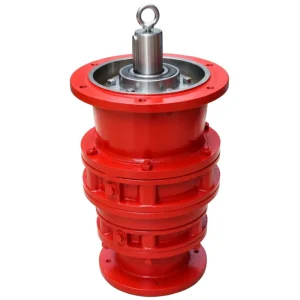
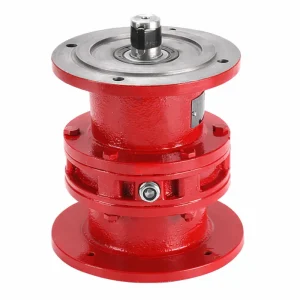
EP-XWED-Serie Zykloid-Stiftrad-Untersetzungsgetriebe
The EP-XWED Series is a precision-engineered Cycloidal Pinwheel Reducer Gearbox purpose-built for demanding industrial environments where reliability, compact design, and high torque density are non-negotiable. Rooted in the proven cycloidal pin gear meshing principle, this series departs from conventional involute gear architectures to deliver a fundamentally more robust drive solution.
Designed to operate under compression rather than shear, the internal assembly is extraordinarily resistant to shock loads, vibration, and unexpected overloads — factors that routinely degrade involute gear systems over time. The result is a cycloidal speed reducer that maintains dimensional stability and performance characteristics over a far longer service life than comparable gear-type units. Whether you are integrating this gearbox into a high-cycle conveyor line, a robotic joint, or a precision mixing drive, the EP-XWED consistently delivers the torque output you need with minimal maintenance intervention.
EP-XWED-Serie Zykloid-Stiftrad-Untersetzungsgetriebe
Heavy-Duty Industrial Cycloidal Speed Reducer | Multi-Stage Ratio | OEM & B2B Supply
HRC 58–62 Hardness
≥95% Efficiency
500% Overload Rating
1. Technische Spezifikationen

| Parameter | Spezifikation |
|---|---|
| Gear Precision Grade | Grade 6 (ISO 1328) |
| Gear Surface Hardness | HRC 58–62 |
| Gear Material | 20CrMnTi (Alloy Carburizing Steel) |
| Shaft Material | 40Cr (Alloy Structural Steel) |
| Housing Material | Aluminum Alloy (primary); Cast Iron (optional) |
| Bearing Brands | HRB / NSK / SKF |
| 1st Stage Reduction Ratio | 1:6 to 1:87 |
| 2nd Stage Reduction Ratio | 1:99 to 1:7569 |
| 1st Stage Efficiency | ≥ 95% |
| 2nd Stage Efficiency | ≥ 90% |
| Simultaneous Mesh Contact | Up to 67% of reduction components |
| Overload Resistance | 500% |
| Input Options | C-Face / Free Shaft / Gearmotor / Brake Motor |
| Montage | Horizontal (Two Horizontal, Vertical Mounting available) |
| Standard Colors | Blue / Gray |
| Modell | A | C | DC | E | F | M | N | G | P | H | R | V | und | Ausgabe | |||||
|---|---|---|---|---|---|---|---|---|---|---|---|---|---|---|---|---|---|---|---|
| Dh6 | e | B | T | H | s×m | ||||||||||||||
| 8075A | 125 | 80 | 110 | 60 | 120 | 84 | 144 | 41 | 12 | 138 | 10 | 35 | 4-φ9 | 14 | 25 | 5 | 11 | 16 | — |
| 8085A | 131 | 80 | 110 | 60 | 120 | 84 | 144 | 47 | 12 | 138 | 10 | 35 | 4-φ9 | 18 | 30 | 6 | 14.5 | 20.5 | — |
| 8095A | 190 | 100 | 150 | 90 | 150 | 130 | 180 | 60 | 15 | 207 | 12 | 40 | 4-φ11 | 28 | 35 | 8 | 24 | 31 | — |
| 8105A | 204 | 100 | 150 | 90 | 150 | 135 | 180 | 60 | 15 | 207 | 12 | 40 | 4-φ11 | 28 | 35 | 8 | 24 | 31 | — |
| 8115A | 240 | 120 | 204 | 115 | 190 | 155 | 230 | 82 | 20 | 257 | 15 | 55 | 4-φ14 | 38 | 55 | 10 | 33 | 41 | — |
| 8115B | 252 | 120 | 204 | 115 | 190 | 155 | 230 | 82 | 20 | 257 | 15 | 55 | 4-φ14 | 38 | 55 | 10 | 33 | 41 | — |
| 8130A 8135A | 294 | 150 | 230 | 145 | 290 | 195 | 330 | 100 | 25 | 300 | 22 | 65 | 4-φ18 | 50 | 70 | 14 | 44.5 | 53.5 | M10×18 |
| 8130B 8135B | 303 | 150 | 230 | 145 | 290 | 195 | 330 | 100 | 25 | 300 | 22 | 65 | 4-φ18 | 50 | 70 | 14 | 44.5 | 53.5 | M10×18 |
| 8130C 8135C | 317 | 150 | 230 | 145 | 290 | 195 | 330 | 100 | 25 | 300 | 22 | 65 | 4-φ18 | 50 | 70 | 14 | 44.5 | 53.5 | M10×18 |
| 8145A | 314 | 150 | 230 | 145 | 290 | 195 | 330 | 120 | 25 | 300 | 22 | 65 | 4-φ18 | 50 | 90 | 14 | 44.5 | 53.5 | M10×18 |
| 8145B | 323 | 150 | 230 | 145 | 290 | 195 | 330 | 120 | 25 | 300 | 22 | 65 | 4-φ18 | 50 | 90 | 14 | 44.5 | 53.5 | M10×18 |
| 8145C | 337 | 150 | 230 | 145 | 290 | 195 | 330 | 120 | 25 | 300 | 22 | 65 | 4-φ18 | 50 | 90 | 14 | 44.5 | 53.5 | M10×18 |
2. Five Key Advantages of This Cycloidal Pinwheel Reducer Gearbox
1. Simultaneous Multi-Tooth Engagement
Up to 67% of the cycloidal disk's pin contacts are engaged at any given moment. This dramatically distributes the transmitted load, eliminating the single-point stress concentrations that cause premature failure in conventional spur or helical gear sets. The architecture inherently supports an overload resistance of 500%, a specification that most standard reducers simply cannot approach.
2. Exceptionally Wide Speed Ratio Range
The EP-XWED series offers a first-stage reduction ratio from 1:6 to 1:87, expandable through two-stage configurations to achieve ratios between 1:99 and 1:7569. This breadth of coverage means a single product family can address an enormous variety of drive applications without requiring custom engineering for each project — reducing procurement complexity for high-volume or multi-line installations.
3. High Transmission Efficiency
Rolling meshing between the cycloidal disk and pin rollers replaces the sliding contact inherent in worm and helical gear designs. This rolling action cuts frictional heat generation and energy loss significantly. First-stage efficiency is rated above 95%, with two-stage units maintaining over 90% — meaningful savings in energy cost over the operational lifetime of any continuous-duty industrial installation.
4. Superior Seal Design and Lubrication System
The EP-XWED incorporates wear-resistant sleeve seals combined with pressure-rated elastomeric seals at all dynamic interfaces. An oil sight gauge provides instant, tool-free visual confirmation of lubricant level, eliminating guesswork during routine preventive maintenance inspections. This design philosophy directly reduces unplanned downtime by catching lubrication issues before they propagate into bearing or disk damage.
5. Versatile Input Configuration Options
The gearbox accommodates C-Face motor flanges, free shaft inputs, direct gearmotor integration, and brake-motor pairing. This input flexibility enables the EP-XWED to slot into existing drive systems as a drop-in replacement for worn-out units or as a new installation with minimal auxiliary bracketing — reducing integration engineering time and keeping project timelines on track.
3. How Does a Cycloidal Pinwheel Reducer Gearbox Work?
Im Mittelpunkt jedes Zykloidengetriebe lies a deceptively elegant mechanism that converts high-speed rotational input into controlled, high-torque output through eccentric motion rather than direct gear meshing. When the input shaft rotates, an eccentric bearing mounted on it drives a cycloidal disk — a precisely profiled plate with a curved, wave-like outer edge — into an orbiting, wobbling motion inside a fixed ring of cylindrical pins (the pin-wheel housing). As the disk's curved profile rolls continuously against these pins, it traces a cycloidal path, completing one full orbital cycle for every revolution of the input shaft. This orbital motion is then captured and converted into smooth, concentric output rotation through a set of output pins or rollers passing through holes in the disk, which extract only the rotational component and cancel the eccentric wobble.
The number of lobes on the cycloidal disk differs from the number of pins in the housing by exactly one. This one-tooth difference is what creates the reduction ratio — a 29-lobe disk in a 30-pin housing produces a 1:29 reduction in a single stage. Because the load is shared across dozens of pin contacts simultaneously rather than the two or three teeth engaged in a typical helical gear mesh, each individual contact point carries only a fraction of the total transmitted torque. This is the physical basis for the system's remarkable overload and shock-load tolerance. The rolling contact also means that heat generation is substantially lower than in sliding-contact gear arrangements, which directly translates into cooler running temperatures, longer lubricant service intervals, and reduced thermal expansion effects on dimensional accuracy.
For engineers comparing a Zykloidgetriebe vs. Planetengetriebe, the key differentiators are torque density and shock resistance: cycloidal units typically deliver higher torque from a smaller envelope and handle impact loads without the risk of tooth breakage that limits planetary systems under severe shock conditions. A cycloidal pinwheel reducer gearbox diagram will immediately illustrate this compact power density advantage, which is why the technology is favored in robotics joints, heavy conveyors, and processing machinery where installation space is constrained but performance demands are uncompromising.

4. Materials and Build Quality
Material selection for a high-load cycloidal pinwheel reducer is not an afterthought — it is one of the primary determinants of service life and failure mode. Every rotating component in the EP-XWED series is manufactured from vacuum-degassed, bearing-grade steel that has been fully hardened through a controlled heat treatment process, ensuring consistent mechanical properties throughout the cross-section of each part rather than only at the surface. The cycloidal disk and output rollers, which bear the greatest contact stress in service, are machined from 20CrMnTi, a chromium-manganese-titanium alloy carburizing steel widely recognized in precision gearbox manufacturing for its excellent carburized surface hardness — reaching HRC 58 to 62 — combined with a tough, impact-absorbing core. This hardness profile is critical for withstanding the repetitive Hertzian contact stress generated during continuous operation under high load cycles.
Output and input shafts are produced from 40Cr, a chromium alloy structural steel offering a well-balanced combination of tensile strength, toughness, and machinability. This material excels in applications where the shaft must simultaneously resist bending stress from radial loads and torsional stress from transmitted torque — conditions that are routine in industrial drive systems. The housing is offered in two configurations: a lightweight yet structurally rigid aluminum alloy option for applications where weight reduction and thermal dissipation are priorities, and a heavy-duty ductile cast iron housing for environments demanding maximum vibration damping and impact resistance. Bearings are sourced from established global brands — HRB, NSK, and SKF — selected specifically for the load ratings and speed ranges relevant to each model in the series. This approach ensures that every unit leaving the production line carries bearing components with documented, traceable performance characteristics rather than anonymous commodity parts of unknown provenance.
5. Anwendungsszenarien
The EP-XWED Zykloidgetriebe mit Stiftrad serves a broad cross-section of industrial sectors. Its combination of high torque density, shock resistance, and compact form factor makes it appropriate wherever a conventional gear reducer has historically been the weakest link in a drivetrain. Below are the primary application environments where this series consistently delivers measurable performance advantages.
Förder- und Materialhandhabungssysteme
A cycloidal pinwheel reducer for conveyor systems must handle variable loading patterns, frequent starts-and-stops, and occasional belt jamming events without internal damage. The 500% overload capacity of the EP-XWED absorbs these events routinely, maintaining drive integrity where gear reducers would experience tooth fracture or shaft fatigue. Ideal for aggregate, packaging, logistics, and warehouse automation conveyors across the USA and globally.
Robotics and Industrial Automation
A cycloidal reducer gearbox for robotics demands zero backlash or near-zero backlash, high stiffness, and exceptional repeatability over millions of positioning cycles. The EP-XWED's multi-tooth engagement geometry provides inherently higher torsional stiffness than single-mesh gear pairs, supporting the high positional accuracy requirements of robotic arms, automated guided vehicles (AGVs), and precision assembly turntables in US manufacturing facilities.
Food Processing and Packaging
Meat processing, seafood handling, baking line conveyors, canned food production — these environments demand drives that can be cleaned regularly without water ingress damaging internal components. The EP-XWED's pressure-rated seals and robust housing integrity make it well-suited to the wet, wash-down conditions common in food-grade manufacturing, where corrosion resistance and sealing performance are as important as raw torque capacity.
Pharmaceutical and Chemical Processing
Mixing, blending, and agitation equipment in pharmaceutical and cosmetics manufacturing require drives with stable output torque and very low vibration — fluctuations that could compromise batch consistency or damage sensitive in-process materials. The rolling mesh design of the EP-XWED inherently generates less vibration than involute gear systems, making it a practical choice for precision chemical blending and pharmaceutical production lines.
Tire, Paper, and Battery Manufacturing
Tire production lines, corrugated paper machines, and battery electrode coating systems all impose continuous heavy-duty cycling on their drive trains. The compact footprint of a Zykloidgetriebe mit hohem Drehmoment allows engineers to fit higher reduction ratios into smaller machine frames without compromising torque capacity, enabling more efficient machine designs that require less floor space and fewer auxiliary support structures.

6. Industry Regulations and Compliance Standards
Industrial gearbox procurement in the United States and internationally is governed by a layered framework of mechanical engineering standards, workplace safety regulations, and product-specific directives. Engineers and procurement managers selecting a cycloidal pinwheel reducer gearbox supplier USA should verify that the equipment they source is manufactured in alignment with these frameworks to avoid compliance gaps during facility audits or customs clearance.
| Region / Body | Anwendbare Norm oder Verordnung | Umfang |
|---|---|---|
| USA — OSHA | 29 CFR 1910.219 (Machine Guarding) | Requires proper guarding of all exposed power transmission components including gearboxes in industrial settings |
| USA — ANSI | ANSI/AGMA 6001 / ISO 9001 | Design and selection standards for enclosed drives; quality management system requirement |
| European Union — CE | Machinery Directive 2006/42/EC | CE marking mandatory for gearboxes sold or incorporated into machinery in EU member states |
| ISO (Global) | ISO 1328 (Gear Accuracy) / ISO 14001 (Environmental) | Defines gear precision grading internationally; environmental management system standard for manufacturers |
| Japan / Asia | JIS B 1702 (Gear Tolerance) | Japanese Industrial Standard for cylindrical gear tolerances, relevant for export to Japan and APAC supply chains |
| Kanada | CSA Z432 (Safeguarding of Machinery) | Governs guarding requirements for power transmission equipment in Canadian workplaces |
| Australien / Neuseeland | AS 4024.1 (Safeguarding of Machinery) | Mandatory safety standard for machinery and drive components in AU/NZ industrial applications |
| RoHS (EU + Global) | Directive 2011/65/EU (RoHS 2) | Restricts hazardous substances in electrical and electronic equipment; relevant for gearmotor-integrated units |
For buyers executing cycloidal reducer gearbox B2B procurement United States, confirming that the supplier maintains an ISO 9001:2015 certified quality management system and can provide material certifications, dimensional inspection reports, and traceability records for each shipment is strongly advisable. Bulk orders and OEM supply arrangements should include contractual specifications for inspection sampling plans aligned with relevant ANSI or ISO acceptance quality limit (AQL) standards.
7. Über uns
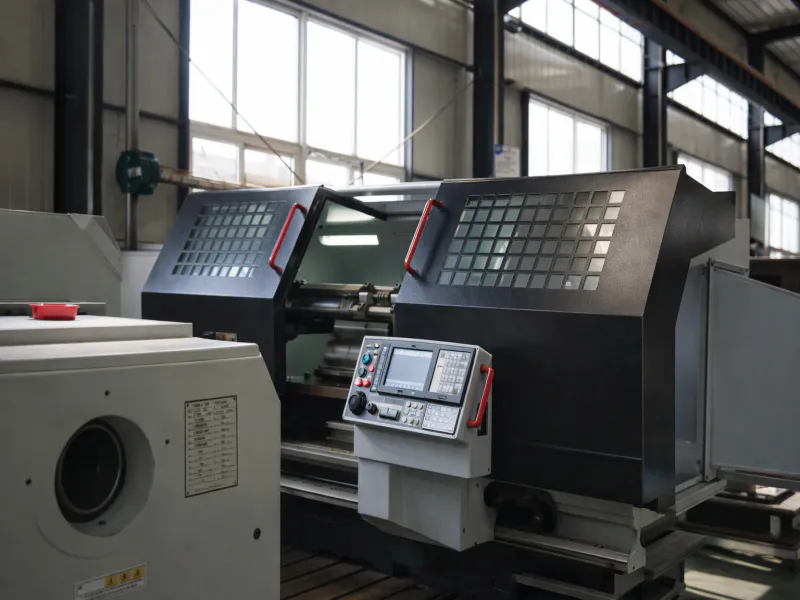
We are a specialized manufacturer of precision gearboxes with a multi-decade production history in cycloidal and planetary drive technology. Our engineering team encompasses dedicated R&D personnel, application engineers, and a professional international sales division — working collectively to ensure that every product delivered to a customer meets or exceeds the documented technical specifications. Our manufacturing facilities operate under a rigorous quality management framework, and our processes have been continuously refined through thousands of projects across industries ranging from food processing and pharmaceuticals to robotics, energy infrastructure, and heavy industrial automation.
We believe that a gearbox manufacturer's value extends well beyond the moment of shipment. That is why our pre-sale application engineering team works directly with customers to match the correct reduction ratio, mounting configuration, and housing material to each unique operating environment. Our aftersales support team remains available to assist with installation guidance, commissioning checks, and replacement part sourcing throughout the product's service life. For cycloidal pinwheel reducer gearbox customization service US requirements — non-standard flange dimensions, special surface treatments, or adapted ratio combinations — our engineering team provides detailed proposals typically within five to seven business days of receiving the technical brief.
As a factory-direct cycloidal reducer manufacturer, we eliminate intermediary markups and maintain direct control over quality outcomes from raw material procurement through final inspection. Our products have been successfully deployed across North America, Europe, Southeast Asia, and the Middle East, with an established track record in both standard catalog supply and OEM private-label production for international machinery builders. We welcome visitors for factory audits and inspection — transparency in our production process is a cornerstone of how we build long-term supplier relationships.
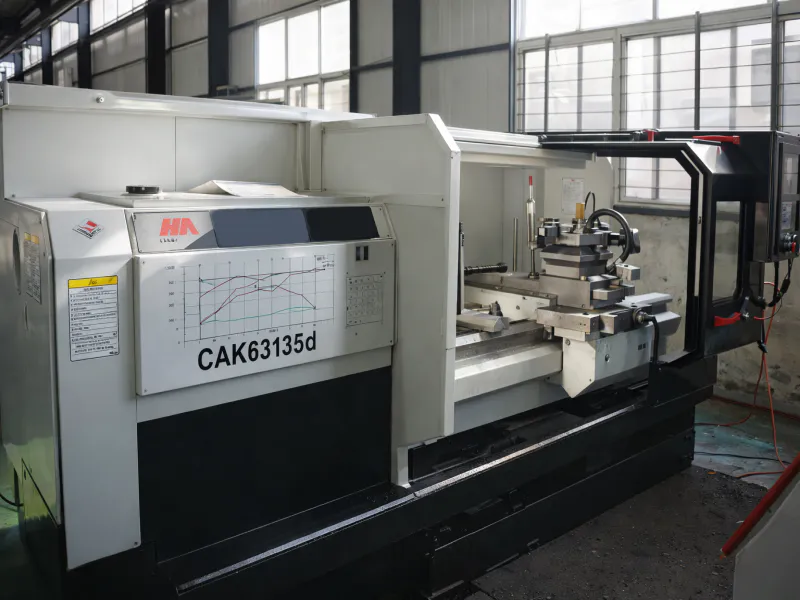
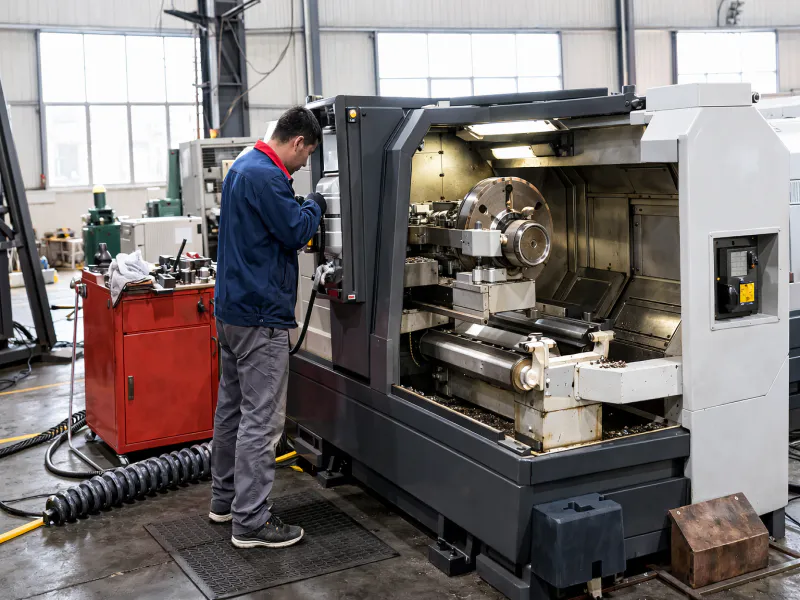
Werkstatt

8. Related Products & System Compatibility
The EP-XWED Cycloidal Pinwheel Reducer Gearbox is designed to integrate seamlessly within a broader industrial drivetrain ecosystem. To support the complete power transmission chain — from prime mover to driven load — we also supply matched drive components that are engineered for direct compatibility with this gearbox series. Specifying components from a single coordinated supply source eliminates interface mismatches, reduces lead time complexity, and simplifies procurement for plant engineering teams handling multi-line installations or turnkey project builds.
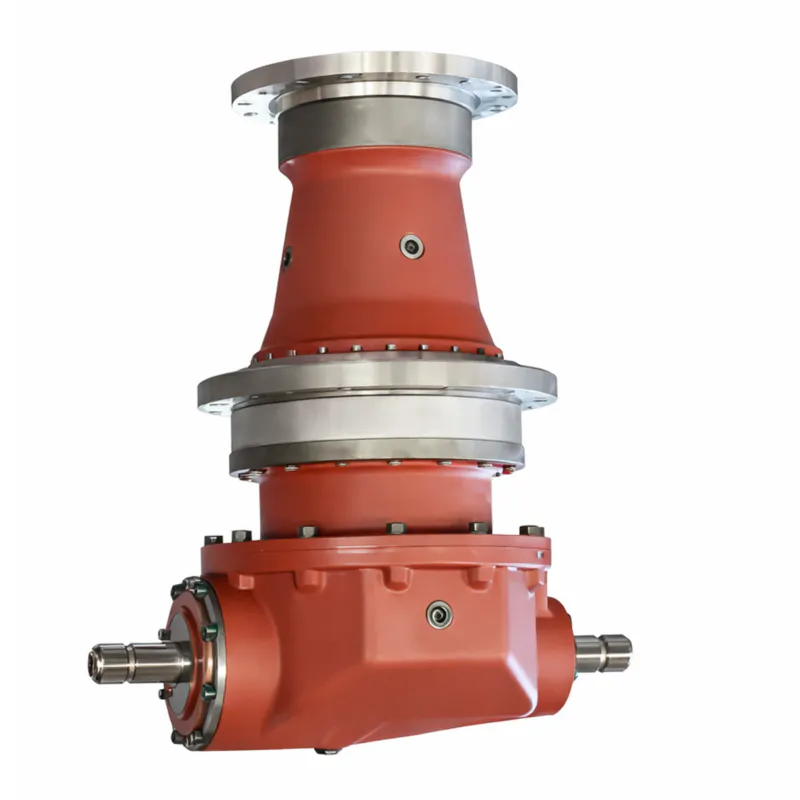
Planetengetriebe
Dank präziser Konstruktion und robuster Bauweise bieten unsere Getriebe eine zuverlässige Drehmomentverstärkung, minimales Spiel und eine erhöhte Belastbarkeit.
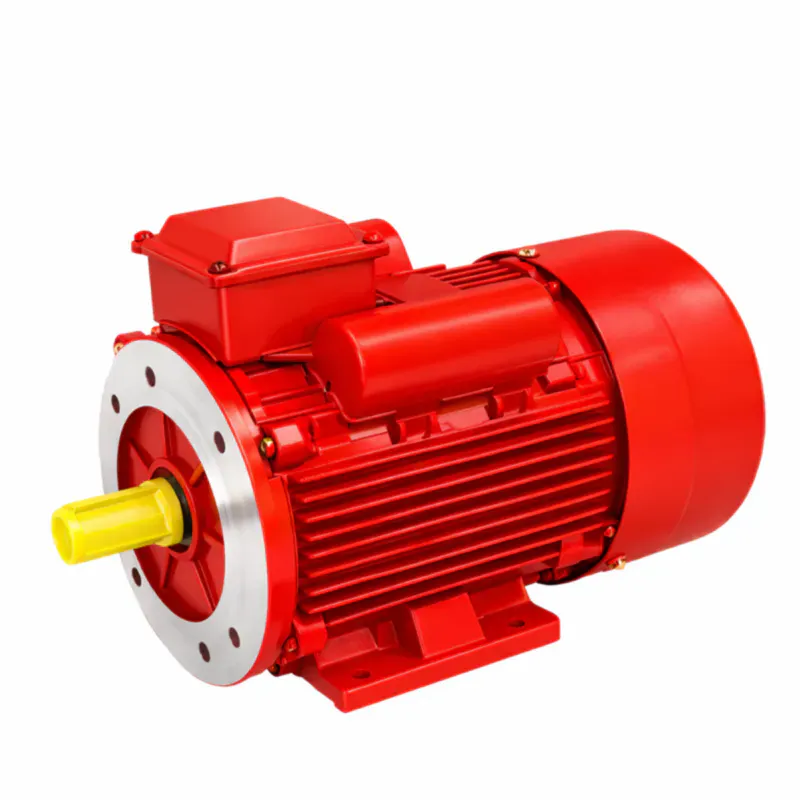
Antriebsmotoren
We supply matched electric motors sized for direct coupling to the EP-XWED gearbox series, available with C-Face flanges that index directly to the gearbox input without additional adapter plates. For a complete selection of compatible Gearboxes and drive system components, browse our full catalog to configure a one-stop drivetrain solution for your project.
Häufig gestellte Fragen
Q1. What is the main difference when comparing a cycloidal reducer vs a planetary gearbox for heavy-duty automation in the USA?
Cycloidal reducers handle shock loads through multi-point rolling contact — up to 67% of the disk-pin interface is engaged simultaneously — which distributes impact energy across the entire mechanism. Planetary gearboxes rely on discrete tooth contact across three or four planet gears, which concentrates shock stress at individual tooth roots. For applications with frequent load reversals, belt jamming, or sudden engagement — common in conveyors, presses, and robotics joints — the cycloidal design typically outlasts planetary units significantly in service life studies conducted in US manufacturing environments.
Q2. Is a cycloidal pinwheel gearbox for automation USA projects compatible with servo motor inputs for precision positioning applications?
Selected models within the EP-XWED series are compatible with servo motor input arrangements, provided that the application's backlash tolerance and torsional stiffness requirements fall within the series' design parameters. For servo-coupled applications in precision automation, robotic positioning tables, or indexing drives, we recommend a pre-engagement application review with our engineering team to confirm that the selected model's lost motion specification meets the system's positioning accuracy requirement. In many moderate-precision automation applications, the EP-XWED's inherently high torsional stiffness — a natural consequence of multi-tooth simultaneous contact — provides adequate positioning performance without the additional cost of zero-backlash gear solutions.
Q3. Which industries in the United States most commonly use cycloidal pinwheel gearboxes for automation equipment?
In the US industrial market, cycloidal pinwheel reducers are most frequently specified in food and beverage processing, pharmaceutical manufacturing, logistics and warehousing automation, metal forming, tire and rubber production, corrugated paper lines, battery manufacturing, and general purpose conveying systems. The combination of shock resistance, high torque density, and long maintenance intervals aligns well with the continuous-duty operating profiles common to these industries.
Q4. What reduction ratios are available for the EP-XWED series cycloidal speed reducer, and how should I choose the right one?
The EP-XWED series covers first-stage ratios from 1:6 to 1:87, with two-stage combinations extending to 1:7569. Selecting the appropriate ratio begins by calculating the required output speed from your motor's rated speed, then verifying that the resulting output torque does not exceed the gearbox's rated capacity at the selected ratio. Our engineering team can review your duty cycle profile and assist in confirming the optimal ratio and service factor for your specific application — particularly important for variable-load or high-cycle applications where thermal rating may be the binding constraint rather than mechanical torque capacity.
Q5. Are cycloidal drive reducer gearboxes available with vertical mounting for US conveyor projects where floor space is limited?
Yes. The EP-XWED series supports Cycloidal Pinwheel Reducer Gearbox Vertical Mounting configurations in addition to the standard horizontal two-shaft arrangement. Vertical mounting requires attention to lubrication management — specifically ensuring that the oil level and breather positioning are adapted for the orientation — which our engineering documentation addresses for each vertical-mount model. Vertical configurations are particularly useful in tower conveyor heads, vertical agitator drives, and hoisting applications where minimizing the equipment's horizontal footprint is a layout priority.
Q6. How often does a cycloidal pinwheel speed reducer need scheduled maintenance, and what does routine service typically involve?
Under typical industrial operating conditions, oil changes are the primary scheduled maintenance activity for cycloidal reducers — generally recommended every 2,000 to 5,000 operating hours depending on ambient temperature, duty cycle, and the viscosity grade of lubricant used. The EP-XWED's oil sight gauge allows lubricant level verification at every shift inspection without tools. Bearing inspections and seal checks are recommended at each oil change. Compared to planetary gearboxes of similar torque capacity, cycloidal units generally have lower maintenance frequency requirements because the rolling contact geometry generates less heat and wear debris per hour of operation.
Herausgeber: PXY