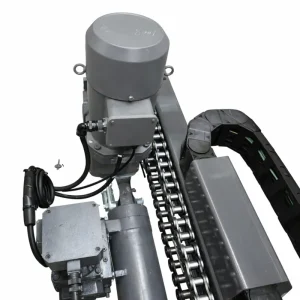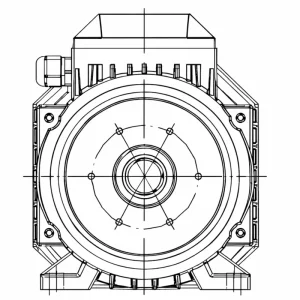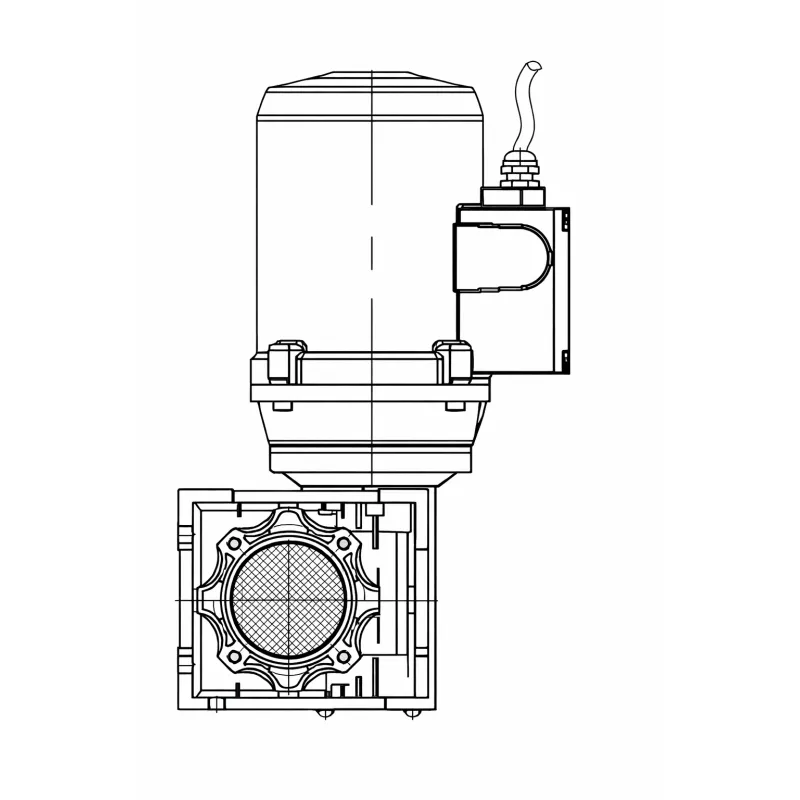
EP-洗车机减速器和电机
The EP-Car Wash Machine Gearbox Reducer is a purpose-engineered, IP67-rated worm gear drive system delivering gear ratios from 15 to 60 with power outputs between 0.25 kW and 0.75 kW — built specifically for the harsh, high-humidity demands of automated car wash equipment. EP-Car Wash Machine Gearbox Reducers’ RV050 and RV063 reducer frames combined with FS-71/B14 and FS-80/B14 motor flanges form a fully sealed, corrosion-resistant unit certified to C4 anti-corrosion grade. With stainless steel fasteners throughout and an S3 intermittent-duty cycle rating, this car wash machine reducer is among the most field-proven solutions available to car wash equipment operators and OEM builders across North America and beyond.
1. EP-Car Wash Machine Gearbox Reducer
Engineered for the relentless wash cycles, chemical exposure, and continuous moisture that define commercial car wash environments, the EP-Car Wash Machine Gearbox Reducer unit integrates a precision worm gear reducer with a purpose-matched motor in a single, compact assembly. Whether you operate a rollover wash bay, a conveyor tunnel system, or an in-bay automatic installation, this car wash equipment speed reducer delivers reliable, low-maintenance torque multiplication across every shift.
| 范围 | 规格 |
|---|---|
| Reducer Model | RV050, RV063 |
| 齿轮比范围 | 15 : 1 — 60 : 1 |
| 马达系列 | FS-71/B14, FS-80/B14 |
| 功率范围 | 0.25 kW — 0.75 kW |
| Protection Rating | IP67 (reducer & motor) |
| 占空比 | S3 (Intermittent Periodic) |
| Anti-Corrosion Grade | C4 (special surface treatment) |
| 紧固件材料 | Stainless Steel (all hardware) |
| Motor Mounting | B14 Flange Mount |
2. Five Key Facts — Car Wash Machine Reducer
1. Fully Sealed to IP67: Both the reducer housing and the motor casing achieve IP67 ingress protection, meaning complete immersion in water up to 1 meter for 30 minutes causes no damage — an absolute requirement for pressure-wash environments.
2. Wide Gear Ratio Selection: Available ratios spanning 15:1 through 60:1 allow engineers to tune output shaft RPM precisely for brush rotation speeds, conveyor chain drives, and high-pressure pump drives within a single product family.
3. C4 Corrosion Class Surface Treatment: A chemically resistant, special coating system on all exterior surfaces meets ISO 12944 Category C4 for high-humidity, mildly corrosive industrial environments — ideal where alkaline detergents and chlorinated rinse agents are in daily use.
4. S3 Duty Cycle Rated: The S3 (intermittent periodic) duty rating accounts for the start–stop patterns of automated car wash conveyors and ensures the motor winding temperature remains within limits across continuous cycles throughout a full business day.
5. Stainless Steel Hardware Throughout: Every fastener — bolts, nuts, and washers — is stainless steel, eliminating the rust and seizure failures that plague standard carbon-steel hardware in wash-bay conditions.
3. What Is the EP-Car Wash Machine Gearbox Reducer?
The EP-Car Wash Machine Gearbox Reducer is a compact, integrated drive solution that combines a worm gear speed reducer with an IEC-frame induction motor in a single, flange-coupled assembly. The reducer section uses an RV-series worm gear cartridge — either the RV050 or the larger RV063 frame — machined from high-strength alloy housing with precision bronze worm wheel gearing that provides quiet, backlash-controlled power transmission. The motor section, belonging to the FS-71/B14 or FS-80/B14 series, bolts directly to the reducer input face through a B14 flange, eliminating coupling misalignment and reducing the overall footprint compared with separate reducer and motor installations.
What distinguishes this car wash equipment gear reducer from standard industrial reducers is the complete environmental package applied to every unit. The IP67 sealing standard means that water, foam, detergent spray, and high-pressure rinse water cannot enter the electrical or mechanical chambers during normal operation. The C4-grade anti-corrosion surface finish is specifically engineered to resist the alkaline and acidic chemical cocktails found in tunnel wash chemistry systems.
Engineers specifying a speed reducer for car wash machines in North American, European, or Asia-Pacific markets consistently identify three deal-breakers: IP protection, corrosion resistance, and reliable S3 performance. The EP-Car Wash Machine Gearbox Reducer addresses all three, making it the preferred choice for OEM car wash equipment manufacturers and aftermarket replacement buyers alike. With power ratings from 0.25 kW to 0.75 kW covering most brush drive and light conveyor drive applications, it fits the majority of automatic car wash platforms currently in commercial operation.
4. How Does a Car Wash Machine Reducer Work?
Understanding the working principle of a worm gear reducer for car wash equipment begins with the basic mechanics of worm gear drives. The motor shaft drives a hardened steel worm (a helical screw) that meshes with a phosphor-bronze worm wheel mounted on the output shaft. Because the worm tooth must travel the full circumference of the wheel for each output revolution, large speed reductions are achieved in a single stage. The RV050 and RV063 housings in this series support ratios from 15:1 through 60:1, meaning that when the motor turns at a typical 1,400 RPM (50 Hz) or 1,700 RPM (60 Hz) synchronous speed, the output shaft rotates at between 23 RPM and 93 RPM — perfectly matched to the low-speed, high-torque requirements of car wash brush assemblies and chain conveyors.
The B14 flange interface between the FS-series motor and the RV reducer ensures that input-shaft axial forces are transmitted directly to the reducer housing rather than through a flexible coupling, which would otherwise introduce play and mechanical losses. The worm wheel material — phosphor bronze meshing against a hardened alloy-steel worm — provides a self-lubricating, low-noise running characteristic that is critical in customer-facing wash bays where noise levels affect the user experience. An oil bath lubrication arrangement within the sealed housing continuously coats the worm mesh, extending service life and minimizing heat buildup even during high-frequency S3 duty cycles typical of high-volume tunnel car wash operations.
The inherent self-locking nature of worm gear ratios above approximately 20:1 adds an incidental safety benefit: the brush or conveyor cannot be back-driven by external forces when the motor is de-energized, reducing runaway risk during emergency stops. This combination of torque multiplication, self-locking behavior, compact single-stage design, and IP67 sealing makes the worm gear architecture the dominant choice for Car Wash Machine Gearbox Reducer applications worldwide.
5. Five Key Advantages of This Car Wash Machine Gearbox Reducer
1. IP67 Dual-Protection Sealing
Both the reducer housing and motor enclosure independently achieve IP67 status — water-submersion resistance to 1 meter depth — so even direct high-pressure rinse-down of the drive unit cannot cause electrical faults or mechanical contamination. This is a higher standard than the IP54 or IP55 commonly offered on general-purpose industrial reducers, and it makes the EP-Car Wash Machine Gearbox Reducer suitable for retrofitting older car wash lines where sealing failures have historically caused repeated motor burnouts.
2. ISO 12944 C4 Anti-Corrosion Surface System
The specially treated exterior surfaces comply with ISO 12944 Category C4, covering high-humidity environments with occasional exposure to industrial chemicals. In car wash chemistry — alkaline presoak, acidic wheel cleaner, rinse aid, and high-pH foam — exterior coatings on untreated reducers typically fail within 12 to 18 months. The C4 system is engineered for a 15-year+ durability target in such conditions, directly reducing capital expenditure on replacement units.
3. Flexible Ratio Selection (15:1 to 60:1)
A single product platform covering gear ratios from 15 to 60 means one part number family can cover brush drives, conveyor chain drives, high-pressure pump drives, and side-wall brush oscillation drives — simplifying spare parts inventory management for multi-site car wash operators and equipment dealers. The ability to switch ratios while retaining the same motor and reducer frame reduces engineering overhead during custom machine builds.
4. Stainless Steel Fasteners — Zero Corrosion Seizure
Every threaded fastener on the unit is stainless steel grade A2 or A4, eliminating the corrosion-seize failures that routinely force destructive removal of carbon-steel bolts in humid service. This translates directly to reduced maintenance labor — a technician can perform a full inspection, seal replacement, or motor swap in minutes rather than hours, directly lowering the total cost of ownership for heavy duty speed reducer car wash equipment.
5. S3 Duty Cycle Compatibility
The S3 duty cycle rating ensures that the motor's insulation class and thermal design are calibrated for the repeated start–stop patterns of automated car wash cycles. Unlike continuous-duty (S1) motors that may be thermally marginal in cyclic service, the S3 motor maintains safe winding temperatures across hundreds of vehicle cycles per day. This prevents the premature insulation breakdown and winding failures that can take a high-volume tunnel wash offline during peak business hours.
6. Material Specifications of Car Wash Machine Gearbox Reducer
Material selection for a Car Wash Machine Gearbox Reducer is not a secondary consideration — it is the primary engineering differentiator in corrosive environments. The EP-Car Wash Machine Gearbox Reducer incorporates the following materials across its key components:
| 成分 | 材料 | Standard / Treatment |
|---|---|---|
| Reducer Housing | Cast iron / aluminum alloy | C4 anti-corrosion special surface coating |
| Worm Gear (wheel) | Phosphor bronze | Precision machined; low-friction, self-lubricating |
| 蜗杆 | Case-hardened alloy steel | Surface hardness HRC 56–62 |
| 输出轴 | Carbon steel / stainless option | Induction hardened bearing journals |
| Motor Frame | Aluminum alloy | Anodized + C4 anti-corrosion coating |
| Motor Winding | Class F insulation copper winding | Thermal class 155°C; moisture-impregnated varnish |
| Shaft Seals | FKM (Viton) lip seals | Chemical resistant, 200°C rated |
| All Fasteners | Stainless steel A2/A4 | ISO 3506; full corrosion resistance |
| 润滑 | Synthetic gear oil (worm grade) | ISO VG 220 mineral or PAO synthetic |
7. Global Regulatory Compliance for Car Wash Machine Gearbox Reducer
Procurement engineers and facility operators responsible for specifying a car wash conveyor speed reducer must navigate a matrix of national and regional regulations governing electrical motors, mechanical drives, and environmental compliance. The EP-Car Wash Machine Gearbox Reducer is designed with these requirements in mind across its primary markets.
United States: Motors intended for commercial car wash applications in the US fall under NEMA (National Electrical Manufacturers Association) standards — primarily NEMA MG 1 for motor performance and enclosure designations. IP67 is equivalent to NEMA Type 6 protection. The US Occupational Safety and Health Administration (OSHA) requires guards on exposed rotating shafts per 29 CFR 1910.212; the compact, enclosed design of this integrated reducer-motor unit reduces the number of exposed points requiring separate guarding. EISA 2007 (Energy Independence and Security Act) mandates premium efficiency for motors 1 HP and above; at sub-1 HP ratings (0.25–0.75 kW), energy efficiency design is governed by voluntary NEMA Premium standards, which the FS-series motor is designed to approach. State-level regulations in California (Title 24) and New York also impose increasingly stringent water-use and wastewater rules on commercial car wash facilities, indirectly driving demand for reliable drive systems that minimize water-wasting unplanned downtime.
European Union: The EU Machinery Directive (2006/42/EC) requires that mechanical assemblies including gearbox-motor units used in automated machinery carry CE marking, demonstrating conformity with essential health and safety requirements. The Low Voltage Directive (2014/35/EU) and the Electromagnetic Compatibility Directive (2014/30/EU) apply to the motor component. RoHS 2 (2011/65/EU) restricts hazardous substances in electrical equipment. The EU EcoDesign Regulation 2019/1781, effective from July 2023, mandates IE2 efficiency class minimum for single-speed AC motors from 0.12 kW, with IE3 required from 0.75 kW — directly relevant to this product's power range. The EP-Car Wash Machine Gearbox Reducer series is designed to meet IE2 at minimum, with IE3-compatible variants available for EU-bound shipments from 0.75 kW.
Germany: German industrial standards governed by DIN (Deutsches Institut für Normung) are influential throughout the EU machine-building sector. DIN EN 60034 covers rotating electrical machines. The German Arbeitsstättenverordnung (ArbStättV) workplace equipment regulations impose additional noise and vibration control requirements that the low-noise worm gear design supports. German car wash operators increasingly specify VDE-conforming motors under VDE 0530 for legal compliance with employer liability requirements.
United Kingdom: Post-Brexit, the UK operates under UK CA marking requirements that closely mirror EU CE requirements. UKCA conformity applies to motors and mechanical drives placed on the Great Britain market after January 1, 2023. BS EN 60034 is the equivalent national standard for rotating machinery, and IP ratings follow BS EN 60529.
Australia / New Zealand: The AS/NZS 3000 wiring rules and the RCM (Regulatory Compliance Mark) govern electrical equipment. Australian workplace safety regulations under the Work Health and Safety Act 2011 require machinery to comply with AS 4024 for safety of machinery — the enclosed, guarded design of the EP-Car Wash Machine Gearbox Reducer supports this compliance pathway. New Zealand's machinery regulations under the Health and Safety at Work Act 2015 impose similar requirements.
Canada: CSA (Canadian Standards Association) standards apply to electrical motors and drives. CSA C22.2 No. 100 covers motors, and CE-marked products from the EU are generally recognized under MRA arrangements. Provincial occupational health and safety acts impose guarding and maintenance-access requirements comparable to OSHA in the US.
Note: Regulations evolve. Always verify current applicable standards with a qualified local compliance engineer before final specification and procurement. Parameters stated here reflect publicly available standards as of the date of publication.
8. Application Scenarios for the Car Wash Machine Reducer
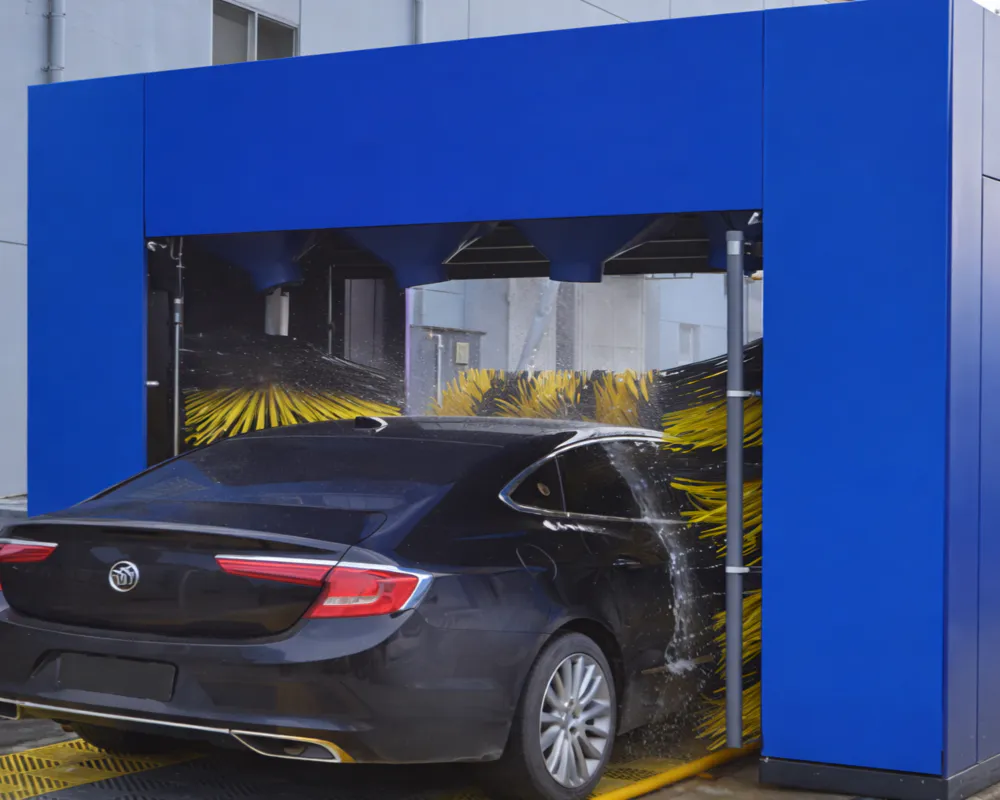
The EP-Car Wash Machine Gearbox Reducer system is designed for direct drive of the main mechanical subsystems found in commercial and industrial car wash installations. Each scenario below represents a validated field application.
Tunnel Car Wash Conveyor Drives
In tunnel car wash systems, vehicles are carried through the wash bay on a continuously moving conveyor chain. The car wash conveyor chain drive reducer must sustain constant torque at very low output RPM — typically 8 to 20 RPM — for hours at a time. The RV063 with a 60:1 ratio and 0.75 kW motor is the preferred selection for this application, providing smooth chain engagement and the S3 duty tolerance needed for the start–load cycles caused by varying vehicle spacing on the conveyor.
Rotating Brush Drive Systems
Top brushes, side brushes, and wheel-arch brushes in automatic car wash equipment require controlled rotation — typically 40 to 80 RPM — with consistent torque regardless of vehicle surface geometry. The RV050 frame with a 20:1 or 30:1 ratio provides the ideal balance of speed and torque for brush applications, with the IP67 sealing ensuring that water spray from adjacent high-pressure nozzles cannot infiltrate the motor or gearbox during active brushing cycles.
Rollover / In-Bay Automatic Wash Systems
In-bay automatic (rollover) car washes use a gantry that travels back and forth over a stationary vehicle. The drive motors must cycle start and stop hundreds of times per day while enduring water, foam, and chemical overspray from every direction. The C4 surface treatment and stainless steel fasteners are especially critical in this application, where the drive unit is enclosed in the wash gantry frame and difficult to access for routine cleaning between cycles.
High-Pressure Pump and Chemical Dosing Drives
Peristaltic chemical dosing pumps and low-pressure gear pumps used for detergent and rinse-aid metering in automatic car wash chemistry systems require small, sealed gear drives with precise ratio control. The 0.25 kW FS-71/B14 motor paired with the RV050 at 40:1 or 60:1 ratio provides a compact, inherently metered drive that is far more reliable than solenoid-operated dosing systems in high-cycle commercial wash environments.
Dryer Blower Belt Drive Pre-Stages
Some tunnel car wash installations use belt-driven blower arrays for blow-dry zones. The drive motor for the belt tensioning or oscillation mechanism must operate in the same harsh environment as all other wash-bay drives. The Car Wash Machine Gearbox Reducer unit's sealed, corrosion-resistant design makes it suitable for this ancillary application, where reliability and minimal maintenance are priorities for wash operators aiming to maximize vehicle throughput.
Self-Service Bay Equipment Drives
Self-service car wash bays use motorized hose retractors, coin-operated brush drives, and automated foam application systems that benefit from the compact form factor of the RV050/FS-71 combination. In self-service environments where equipment may run unattended for extended periods, the robust sealing and low-maintenance worm gear design of this car wash machine dedicated reducer and motor assembly reduces operator intervention and minimizes revenue-impacting downtime.

9. Compatibility & Replacement Fit Guide
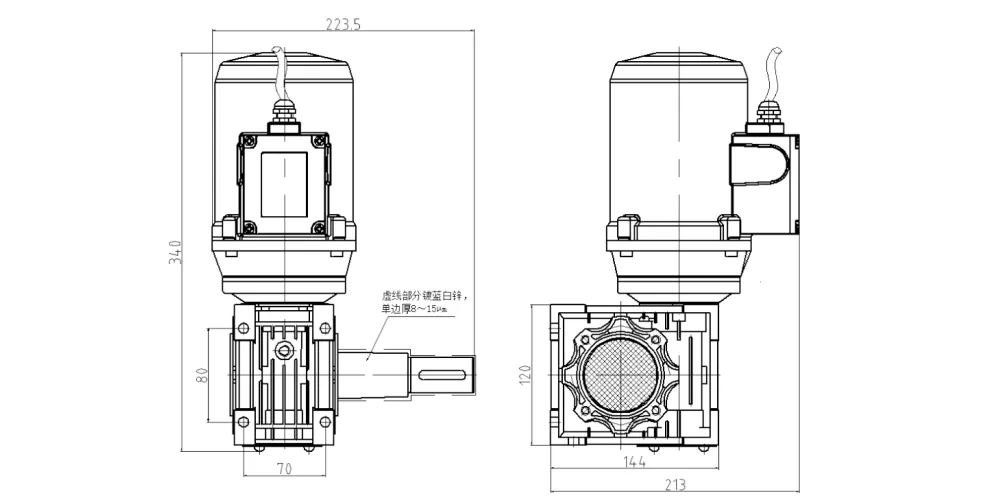
When sourcing a car wash conveyor speed reducer replacement or specifying a drive for new equipment, dimensional compatibility is essential. The RV050 and RV063 frames conform to standard IEC flange and shaft dimensions that make them broadly interchangeable with other RV-series worm reducers available from multiple manufacturers. The B14 flange interface on the FS-71 and FS-80 motor frames is a standard IEC 60072-1 mounting pattern, compatible with motors from any manufacturer sharing the same frame designation.
| 框架 | 输出轴直径 | Flange Mount Size | Foot Mount (B3) | Compatible Motor Frame |
|---|---|---|---|---|
| RV050 | 25 mm | 120 × 120 mm | Yes (optional) | IEC 71 (FS-71/B14) |
| RV063 | 32 mm | 140 × 140 mm | Yes (optional) | IEC 80 (FS-80/B14) |
The EP-Car Wash Machine Gearbox Reducer series is engineered as a direct dimensional equivalent to standard RV worm reducer families widely used in existing car wash equipment. Retrofit installations in existing brush drive assemblies or conveyor drive boxes typically require no frame modification — only the motor wiring and mounting hardware need attention. For applications requiring an emergency car wash gear reducer replacement, units are available with short lead times to minimize tunnel downtime.
10. How to install it?
Proper installation of the car wash equipment speed reducer is essential for achieving the rated IP67 sealing performance and expected service life. Follow these steps:
Step 1 — Verify Specifications: Confirm that the purchased unit's gear ratio, power rating, voltage, frequency, and output shaft diameter match your machine's requirements before installation begins. Check the reducer oil fill level — units are shipped with lubricant pre-filled for the specified mounting position (horizontal or vertical output shaft).
Step 2 — Mounting Position: Mount the reducer in the position specified on the unit's nameplate. Worm reducers are position-sensitive for lubrication; installing the unit in an orientation other than the pre-filled position may result in inadequate lubrication to the worm mesh. Consult the dimension drawing for available mounting foot or flange options.
Step 3 — Coupling or Direct Drive: When connecting the output shaft to the driven component (brush hub, sprocket, or coupling), use a properly sized keyway and key as supplied. Avoid axial loading beyond the rated bearing capacity. A flexible coupling is recommended between the output shaft and driven load where shaft misalignment cannot be fully eliminated.
Step 4 — Electrical Connection: Wire the motor to the local supply according to the terminal block diagram on the nameplate. Verify voltage, phase sequence, and overload relay settings. Use appropriate IP-rated cable glands on the motor terminal box to maintain the IP67 rating of the complete installation.
Step 5 — Sealing Verification: After installation, inspect all gasket surfaces, shaft seal lips, and cable gland fittings. Apply any recommended silicone sealing compound to the reducer cover joint if the unit has been disassembled for inspection. Perform a brief no-load run to confirm correct rotation direction before coupling to the driven load under full operating conditions.
Maintenance Intervals: Inspect shaft seals every 12 months. Change gear oil after the first 500 hours of operation and every 2,000 hours thereafter (or annually, whichever comes first), using ISO VG 220 worm gear oil or the manufacturer's recommended synthetic equivalent. Clean external housing surfaces quarterly to prevent corrosive chemical buildup on the C4 coating.
11. About Us
We are a specialized manufacturer of industrial drive systems with a dedicated product line engineered for the car wash equipment sector. Our engineering team draws on decades of combined experience across motion control, gear design, motor integration, and corrosion-resistant coating technology. The EP-Car Wash Machine Gearbox Reducer series was developed in response to field feedback from car wash equipment operators and OEM builders.
We supply both OEM production runs and aftermarket replacement units. Short-run customization — non-standard ratios, alternative output shaft configurations, and specific voltage/frequency variants — is available with engineering support from our application team. Distributors and dealers in the United States, Canada, Europe, and Australia can access stocking agreements that support the emergency car wash gear reducer replacement timelines demanded by high-volume wash operators.
车间


13. Related Products: Complete Drive System Solutions
电机

常问问题
Q1. What gear ratio should I select for a car wash brush drive in a tunnel system in the United States?
For most commercial tunnel car wash brush applications in the US, a 20:1 to 30:1 gear ratio delivers the 40–70 RPM output speed that brush manufacturers recommend for optimal foam-lather performance and vehicle paint safety. If your motor operates at 60 Hz (1,700 RPM synchronous), a 30:1 ratio produces approximately 57 RPM at the brush hub — a common and well-validated choice. For slower, scrubbing-style brush contact on heavier vehicles, a 40:1 ratio may be preferred by the brush OEM. Always confirm the specific brush manufacturer's recommended hub RPM before finalizing your gear ratio specification.
Q2. How does the IP67 protection on this car wash equipment speed reducer compare to standard industrial gear reducers?
Standard general-purpose industrial gear reducers are typically rated IP54 or IP55 — dust-tight and splash-water resistant. IP67, by contrast, provides complete protection against dust ingress and against continuous water immersion up to 1 meter for 30 minutes. In a car wash environment where high-pressure rinse systems generate water at 50–150 bar directed at vehicle surfaces — and where overspray routinely reaches nearby drive equipment — the difference between IP55 and IP67 is the difference between a drive unit that survives 10+ years and one that fails from moisture damage within 18 months. The EP-Car Wash Machine Gearbox Reducerachieves IP67 on both the reducer housing and motor enclosure independently.
Q3. What does the C4 anti-corrosion grade on a car wash gearbox reducer actually mean for long-term durability?
ISO 12944 Category C4 defines "high corrosivity" environments — including industrial facilities with high humidity and moderate chemical exposure. For a car wash gear reducer, this means the surface coating system is tested and rated to withstand the combination of alkaline presoak chemicals (pH 10–12), acidic wheel cleaners (pH 2–4), salt-containing road-film residue on vehicles, and continuous high-humidity conditions. A C4 coating system typically consists of a conversion coating primer plus a durable topcoat engineered for a 15-year durability target in these conditions. Reducers with only standard industrial paint finishes may show visible rust and paint delamination within 2–3 years in wash-bay conditions.
Q4. What are the key differences between an RV050 and RV063 frame when selecting a Car Wash Machine Gearbox Reducer?
The RV050 and RV063 designations refer to the centre-distance of the worm gear set — approximately 50 mm and 63 mm respectively. The RV063 is the larger frame and supports higher rated output torque, a larger output shaft diameter (32 mm vs 25 mm on the RV050), and a correspondingly more powerful motor (FS-80/B14 vs FS-71/B14). For most car wash brush drive applications, the RV050 at 0.25–0.55 kW is adequate. For conveyor chain drives in full-tunnel car wash systems where the chain must carry the vehicle weight plus friction load, the RV063 at 0.55–0.75 kW is the standard choice. When in doubt, consult the car wash equipment OEM's specification sheet or request a torque calculation from our application engineering team with your conveyor length, vehicle weight class, and chain type details.
Q5. How often should the gear oil in a Car Wash Machine Gearbox Reducer be changed?
The initial oil change on a new car wash reducer should be performed after the first 500 operating hours to flush metallic run-in particles from the new worm and wheel surfaces. Subsequently, change the oil every 2,000 hours of operation or annually — whichever interval occurs first. In car wash applications where the reducer operates in elevated ambient temperatures (common in enclosed wash bays in summer climates), consider shortening the interval to 1,500 hours. Use ISO VG 220 worm gear oil with EP (extreme pressure) additives, or a synthetic PAO equivalent for improved thermal stability and extended drain intervals. Never mix mineral and synthetic oils without a complete drain and flush of the housing.
Q6. What is the difference between an S1 and S3 duty cycle rating, and which is correct for an automatic car wash reducer?
S1 is a continuous duty rating — the motor runs at constant load indefinitely until thermal equilibrium is reached. S3 is an intermittent periodic duty rating where the motor alternates between fixed load periods and rest periods. In automated car wash equipment, motors start and stop for each vehicle cycle — a typical tunnel brush drive might run for 2–3 minutes per vehicle with a 30-second pause between vehicles. This is textbook S3 duty. A motor rated only for S1 continuous duty may actually run cooler in this application because it gets rest periods, but the insulation system and winding design of an S1 motor are not necessarily optimized for the high inrush currents generated by frequent starts. The S3-rated motor in the EP-Car Wash Machine Gearbox Reducer is designed specifically for this start–stop pattern, with appropriate winding insulation and thermal margin to sustain hundreds of cycles per day without accelerated aging.
Q7. Can this car wash machine gearbox reducer be used with a variable frequency drive (VFD) for brush speed control?
Yes, the FS-series motors in this Car Wash Machine Gearbox Reducer product line are compatible with variable frequency drive (VFD) operation. When specifying VFD use, confirm that the motor's insulation class is rated for inverter duty — the FS-series Class F insulation with moisture-impregnated varnish provides adequate protection against the voltage spikes generated by modern pulse-width modulation VFDs. A motor-side output filter (dV/dt reactor) is recommended for cable runs longer than 20 meters between the VFD and motor. The worm gear reducer is mechanically compatible with variable-speed input; however, note that at very low VFD frequencies (below 15–20 Hz), motor cooling is reduced, requiring either a separately powered cooling fan or derating of the motor's continuous power output. For car wash brush applications, a speed range of 30–60 Hz typically covers all operational requirements without significant thermal concerns.
编辑:PXY